THE NECK
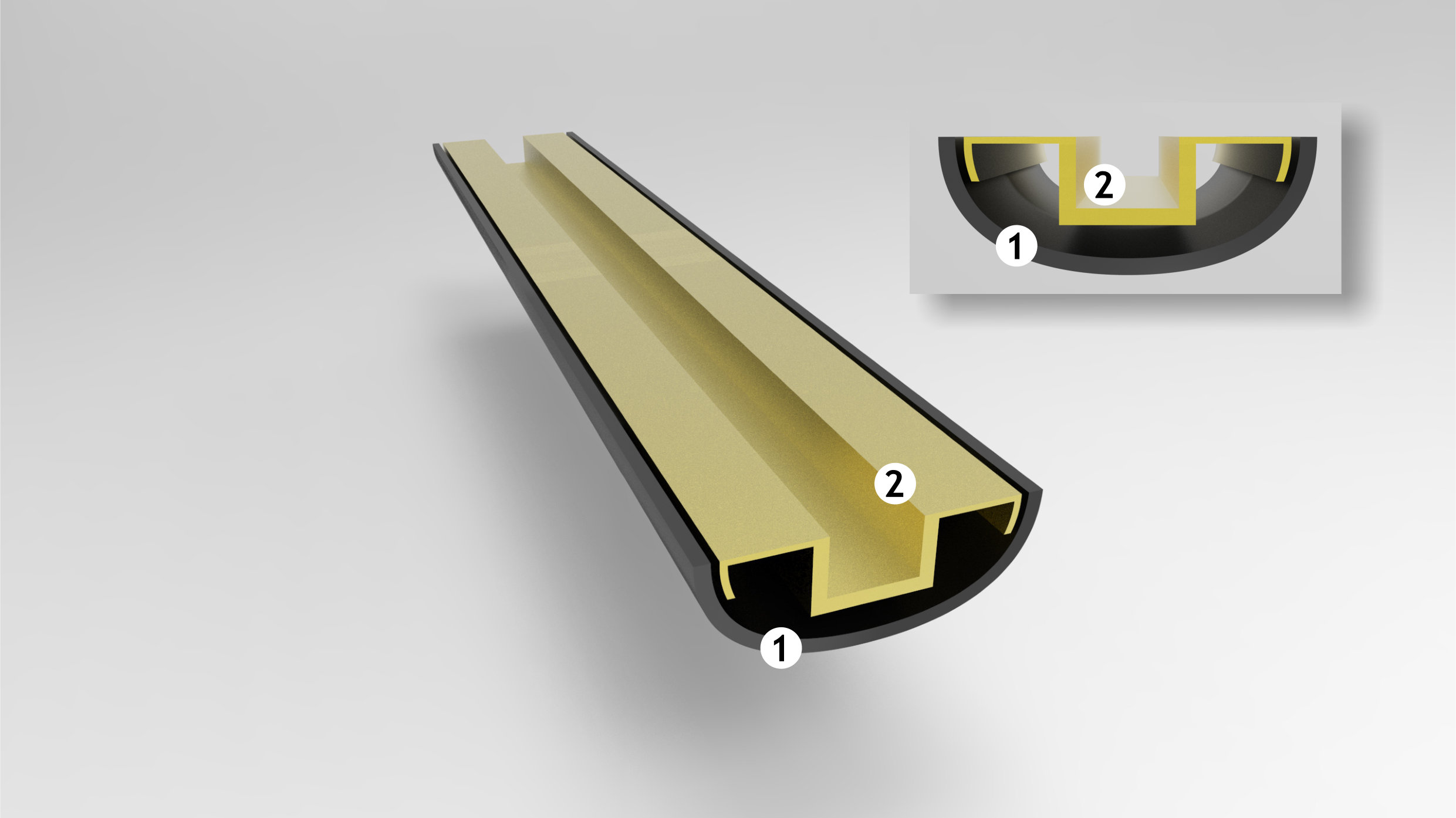
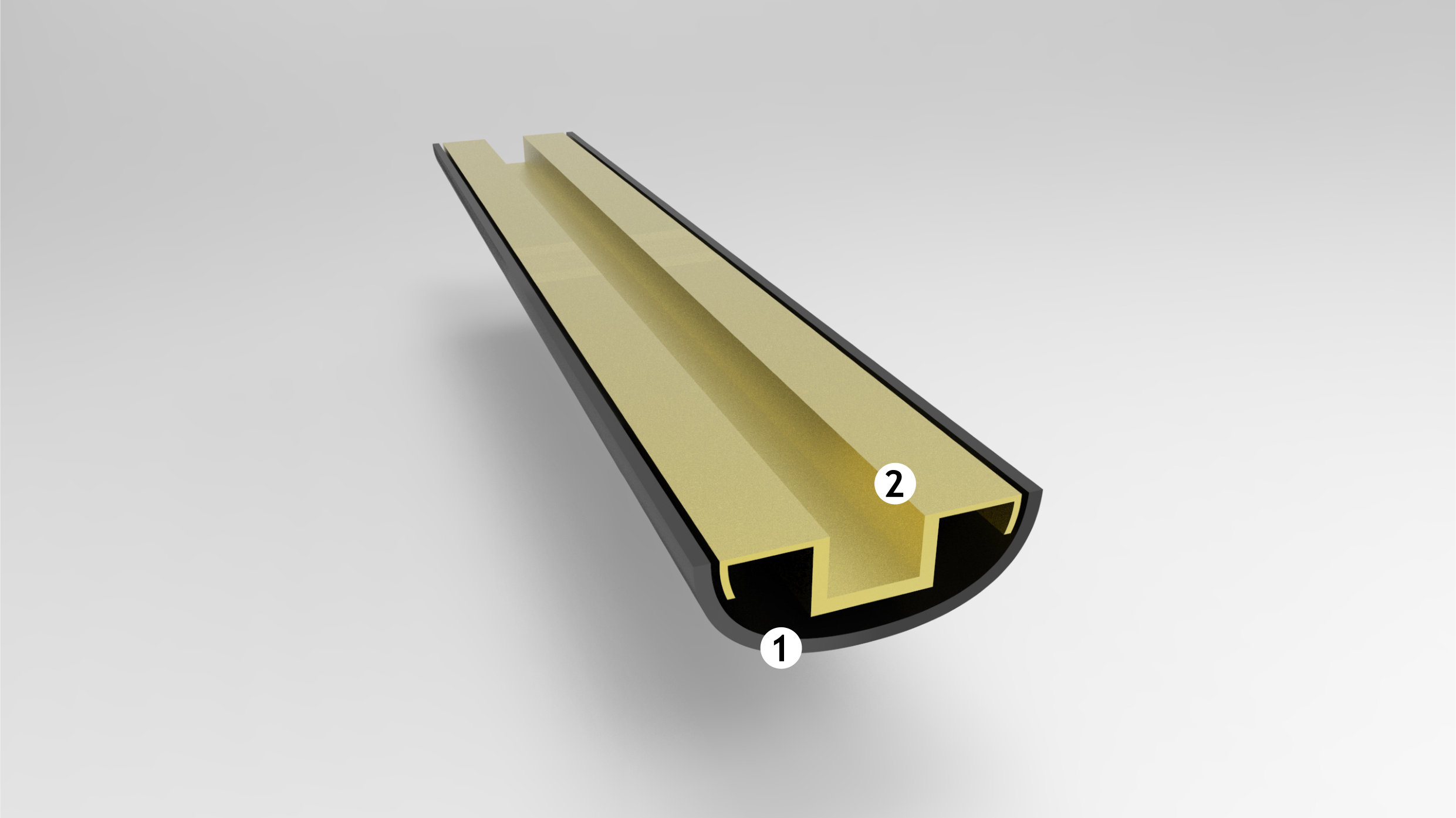
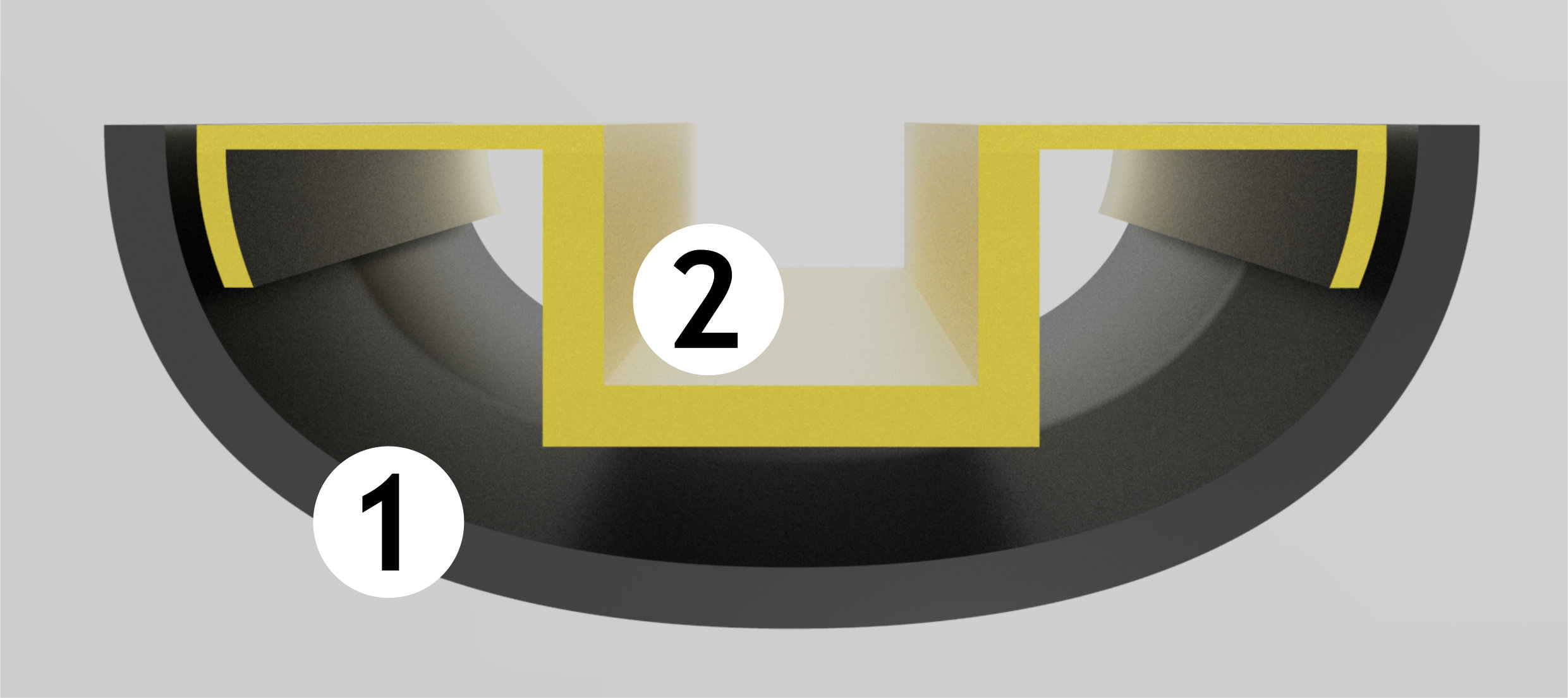
The neck is constructed with a minimum wall thickness of 2 mm and incorporates a structural U-profile through its internal geometry. This design results in an exceptionally strong and dimensionally stable neck with excellent resistance to bending, twisting, and long-term deformation.
Under normal playing conditions, the structure is sufficiently rigid to handle even heavy string gauges without requiring a truss rod. The inherent stiffness of the carbon fiber construction ensures long-term stability under string tension and across varying environmental conditions.
One of the key advantages of this design is the ability to maintain a very low and highly consistent action. Because the neck is minimally affected by changes in humidity and temperature, setup stability is significantly improved compared to traditional wooden necks.
*1 – outer shell of a carbon fiber guitar neck
*2 An internal U-profile geometry is integrated into the neck structure, greatly increasing rigidity and dimensional stability.
THE SIDES
The sides of a guitar play an essential structural role in the overall behaviour of the instrument. Ideally, they should remain highly rigid and resist energy absorption when the top is activated during playing. By minimizing unwanted side vibration, more energy is directed into the top, contributing to greater projection, clarity, and efficiency.
For this reason, Fibertone guitars utilize 2.2 mm carbon fiber sides, resulting in a structure that is exceptionally stiff, lightweight, and acoustically efficient in this application.
Compared to a double-wall side construction, carbon fiber sides also preserve the instrument’s internal air volume rather than reducing it through additional wall thickness.
Clients may choose between several finish options:
• Exposed unidirectional carbon fiber
• Painted sides
• Real wood veneer finish
For veneered instruments, a variety of wood species is available, along with optional custom staining to achieve the desired aesthetic.
All models are available with a maximum side height of 80 mm for archtop guitars and 100mm for flattop guitars, and can be reduced down to 30 mm, allowing the body depth to be tailored to individual specifications.
Overall body thickness is defined by the combination of side height and the thickness of the top and back, both of which thickness may vary depending on construction and design requirements.
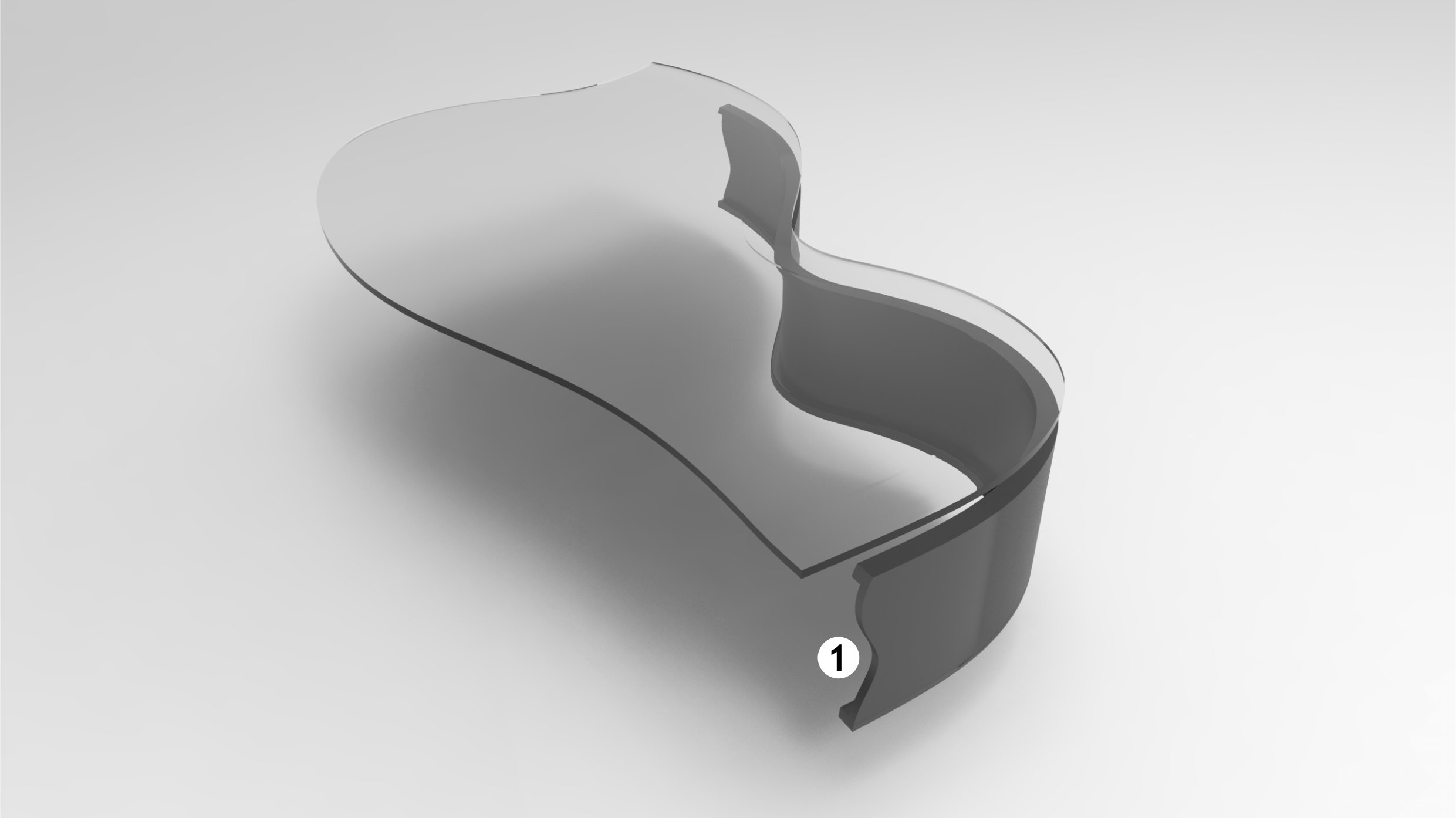
1* Sides constructed using different carbon fiber fabrics and weave orientations
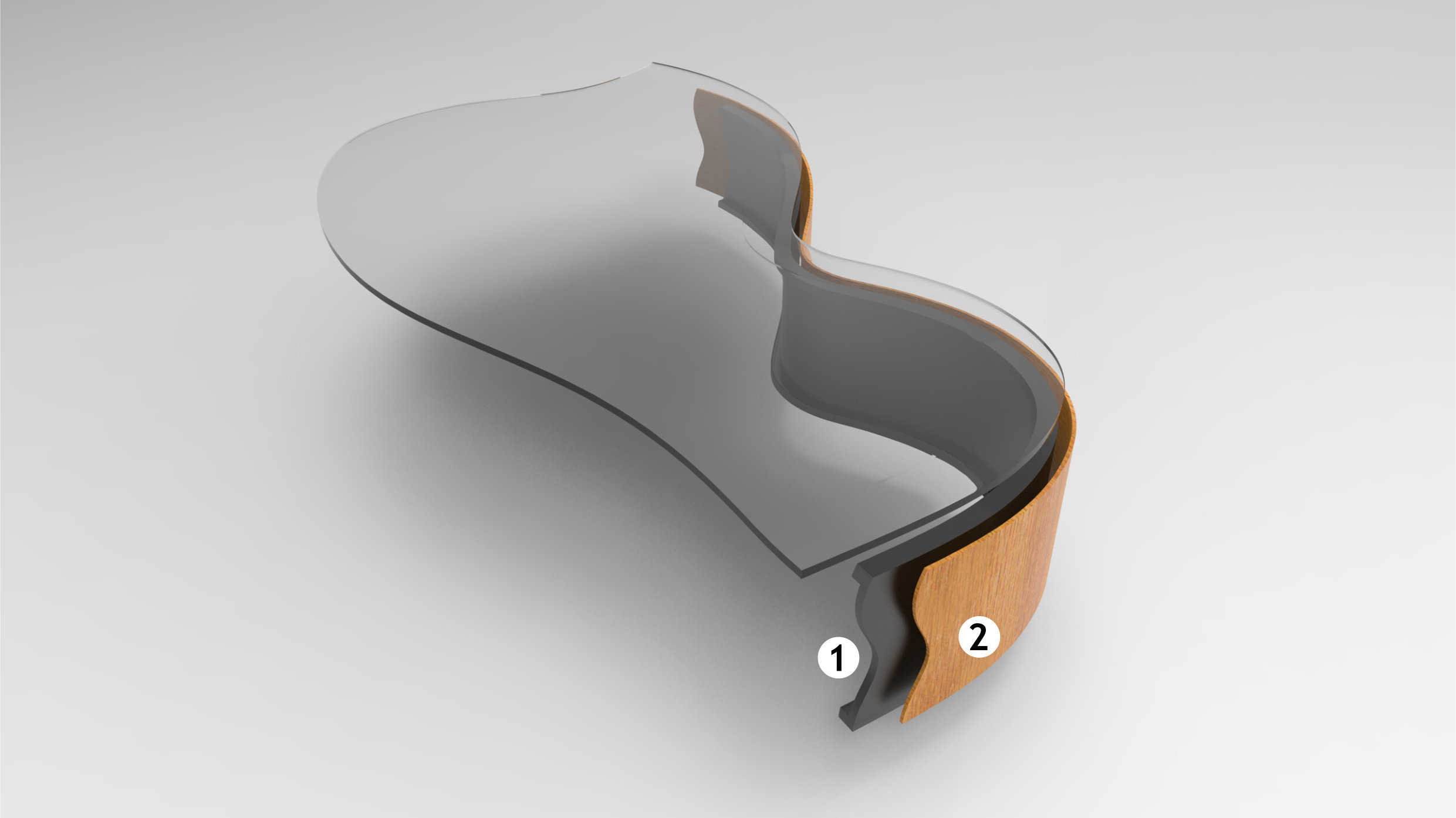
2* Carbon fiber sides finished with a real wood veneer
TOP CONSTRUCTION OPTIONS
Fibertone guitars are available with several top construction options, each offering a distinct tonal character, response, and playing feel. Every construction is developed with a different balance of stiffness, weight, and resonance in mind, allowing the instrument to be tailored to the player’s individual preferences.
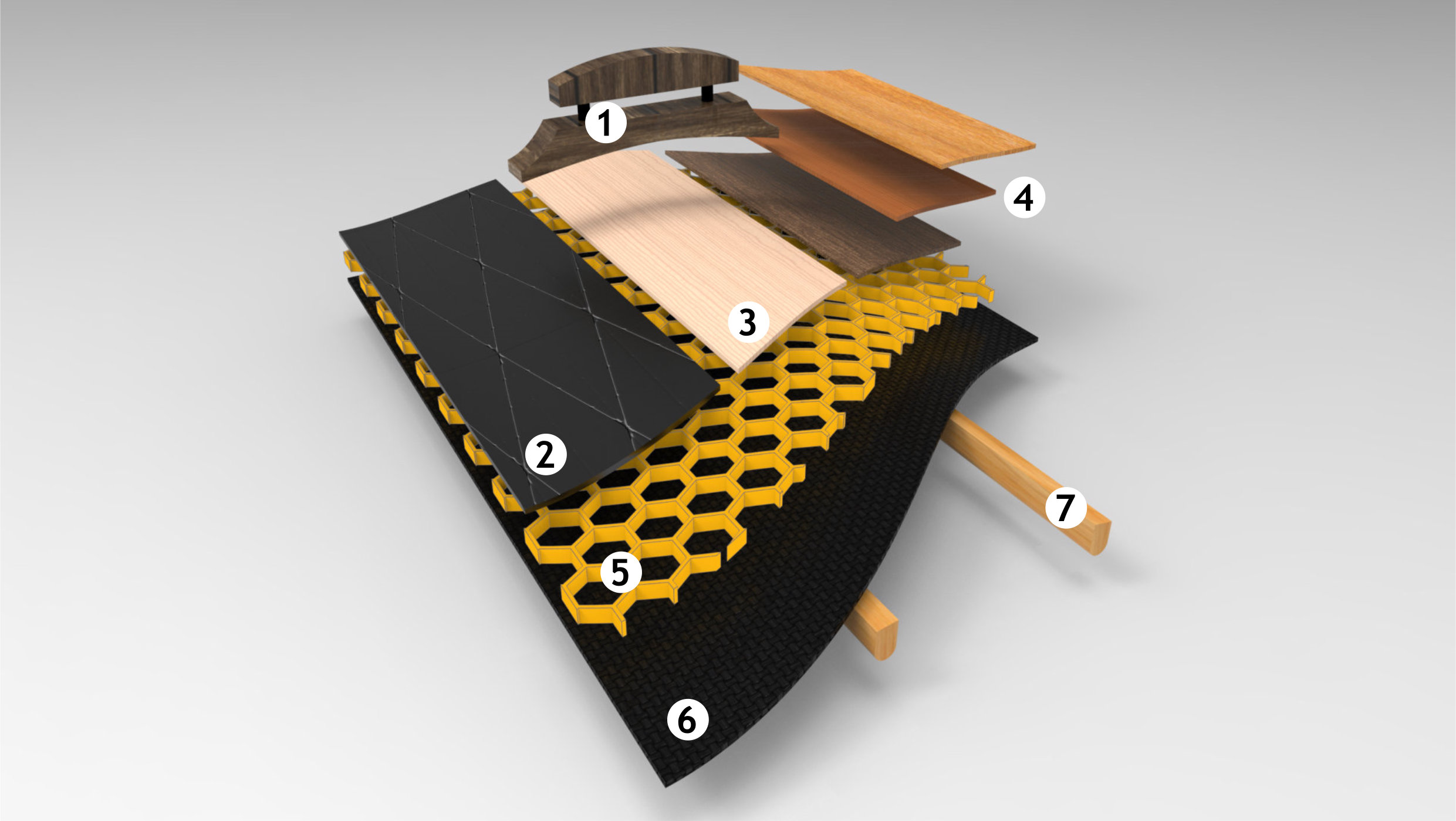
FULL CARBON FIBER TOP 2*
The full carbon fiber top represents the most direct and structurally efficient approach. It offers a fast, immediate response with exceptional clarity, projection, and note separation. The tonal character is focused, articulate, and highly consistent across varying environmental conditions.
This option is particularly suited for players seeking maximum stability, precision, and acoustic efficiency.
CARBON FIBER / SPRUCE DOUBLE TOP 3*
This construction combines spruce, carbon fiber, and a Nomex core in a lightweight double-top configuration.
The spruce outer layer contributes warmth, complexity, and a more organic acoustic character, while the carbon fiber and Nomex structure enhance responsiveness, projection, and structural stability.
The result is a highly efficient top with a broad dynamic range, combining aspects of traditional acoustic behaviour with the speed and consistency of modern composite construction.
Each top construction offers a different balance of tonal colour, response, projection, and feel, allowing the instrument to be tailored to the client’s musical and tonal preferences.
CARBON FIBER TOP WITH WOOD VENEER 4*
This construction combines the structural and acoustic advantages of carbon fiber with the visual warmth and character of natural wood veneers.
While the carbon fiber remains the primary structural element, clients may choose from a variety of veneer species and finishes to achieve the desired aesthetic appearance. The result is an instrument that retains the responsiveness and stability of carbon construction while presenting a more traditional visual identity.
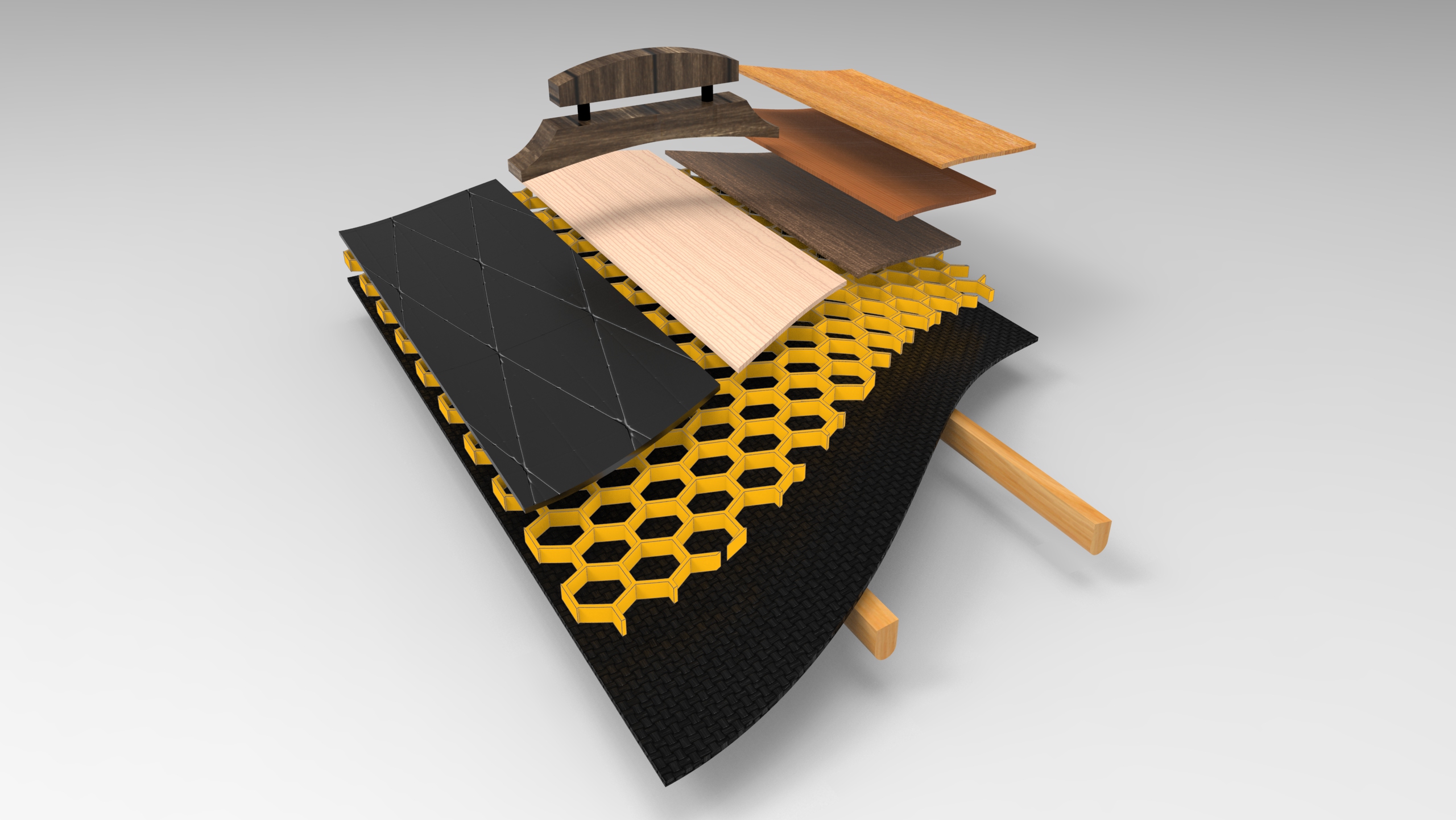
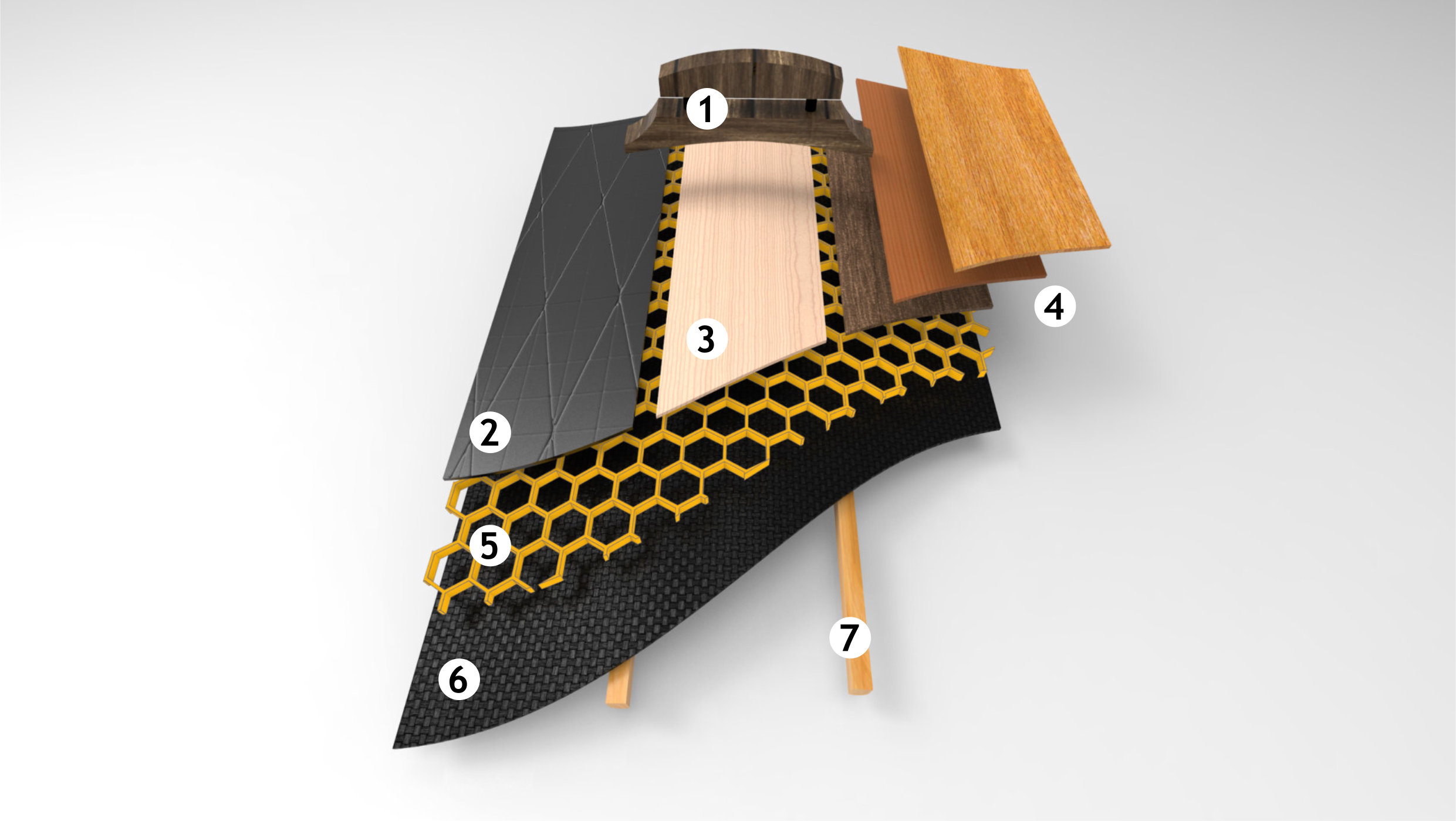
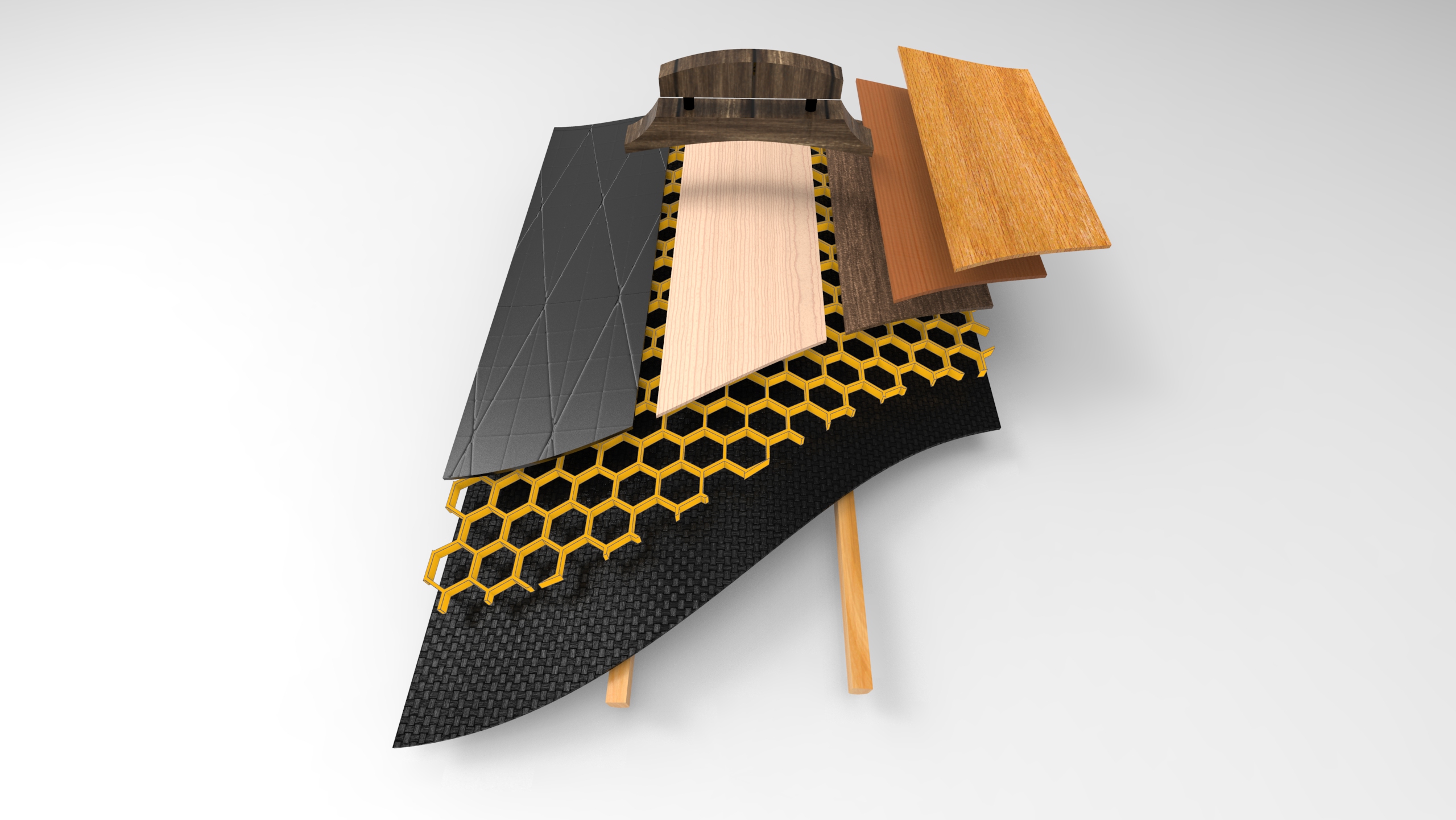
The images below illustrate several construction options available for Fibertone guitars. Each instrument is built according to the client’s individual preferences, with the construction adapted to the guitar’s size, intended response, and desired tonal character.
2* unidirectional carbon fiber finish
3* spruce tonewood
4* carbon fiber with a veneer of your choice
5* nomex or airex core material
THE FRETBOARD
Fibertone guitars utilize Richlite fretboards. Richlite is a paper-and-resin composite with extremely low moisture absorption compared to traditional tonewoods such as ebony, which are more susceptible to seasonal movement, including expansion, contraction, and potential cracking. As a non-porous thermoset material, Richlite remains dimensionally stable in changing environments.
This contributes to the prevention of fret sprout and supports long-term structural consistency of the neck. The smooth, non-porous surface is also easy to maintain and provides a consistent playing feel over time.
Standard specifications include:
• 12″ fretboard radius
• 24.75″ (628 mm) scale length
• Medium stainless steel frets
• White and black purfling as fret markers
• White side dot markers
All specifications can be adapted to individual client requirements.